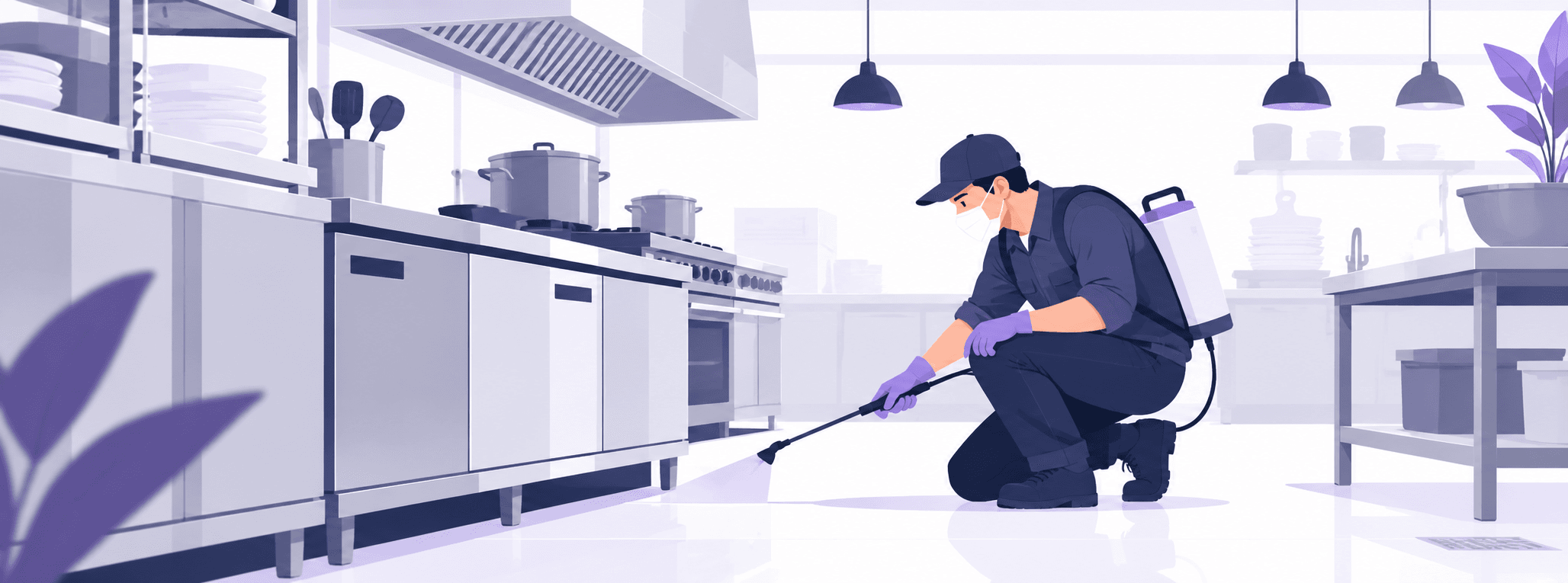
Cockroach treatment for a restaurant in Calgary should start with a professional commercial inspection, not just a quick spray. YYC Pest Control can assess where cockroaches are hiding, what is attracting them, how they are entering, and which treatment approach fits the kitchen and operating schedule. The technician should also explain preparation, safety precautions, treated areas, re-entry instructions, and any follow-up needed.
What to Do When a Calgary Restaurant Spots Cockroaches
Why one visible cockroach can indicate a larger problem
A cockroach seen in a dining area, kitchen, storage room, washroom, or delivery entrance may not be the only one present. Cockroaches often stay out of sight in warm, dark, damp locations, including gaps around plumbing, behind equipment, under sinks, inside wall voids, and around stored supplies.
A daytime sighting can be especially important to report because it may indicate activity in an area that is already crowded or disturbed. However, a single sighting does not tell you the size or location of the infestation by itself. An inspection is needed to connect the sighting with droppings, egg cases, harbourage areas, moisture, food residue, and access points.
Restaurant managers should record the exact location, time, and circumstances of every sighting. A cockroach found near a dishwasher, for example, gives the technician different information from one found beside a dry-storage shelf or at the rear delivery door.
Immediate steps for staff and managers
When staff find a cockroach, the priority is to document the sighting and prevent the area from being disturbed unnecessarily. Avoid moving equipment, spraying over the area, or discarding nearby items before the technician has had a chance to inspect them.
Use a simple incident record that includes:
- The date and approximate time
- The room or work area
- Whether the cockroach was moving, dead, or trapped
- The nearby equipment, drain, sink, storage, or doorway
- Any unusual odour, moisture, food residue, or leaking pipe
- Whether other staff have seen cockroaches
- Any previous treatment or pest activity in the same area
Keep food, ingredients, packaging, and utensils protected according to the restaurant’s normal food-safety procedures. Do not place contaminated items back into service, and follow your internal process for cleaning and sanitizing food-contact surfaces.
A manager should also designate one person to communicate with the pest-control company. Consistent information helps prevent missed details when several employees have seen activity.
When to request an urgent commercial inspection
Request a commercial inspection promptly when cockroaches have been seen in food-preparation, food-storage, dishwashing, waste, or customer-facing areas. The same applies when sightings continue after cleaning, when staff find droppings or egg cases, or when activity appears in more than one part of the building.
An urgent request is also appropriate when a restaurant is dealing with a time-sensitive operating issue, such as an upcoming inspection, renovation, reopening, or heavy service period. Explain the operational deadline when you call, but ask the provider to confirm what appointment availability and treatment schedule are actually possible.
For Calgary restaurants, YYC Pest Control’s commercial pest control service is the relevant starting point for arranging an inspection and discussing treatment in a business setting.
How a Restaurant Cockroach Inspection Works
Areas the technician will check first
A technician will usually begin with the locations most likely to provide warmth, moisture, food, or shelter. In a commercial kitchen, that can include areas beneath and behind refrigerators, ovens, dishwashers, sinks, counters, shelving, and other fixed equipment.
The inspection may also cover:
- Floor drains and plumbing penetrations
- Wall and floor junctions
- Cupboards, storage rooms, and dry-food shelving
- Garbage and recycling areas
- Delivery doors and receiving areas
- Staff rooms, washrooms, and utility spaces
- Voids around pipes, conduits, and built-in equipment
- Adjacent rooms, tenant spaces, or shared building areas
The technician may need access to areas that staff do not normally open during service. The more complete the access, the better the chance of identifying where cockroaches are sheltering and how they are moving through the premises.
A restaurant inspection should not stop at the location where the cockroach was seen. Activity can spread through connected wall spaces, pipe openings, equipment gaps, and shared service areas.
How droppings, egg cases, and activity reveal hiding places
Cockroach droppings may appear as dark specks, smears, or material collected in corners and protected gaps. Egg cases can be found in sheltered locations, although their presence and appearance can vary by species. Shed skins, dead insects, odour, and live activity can also help establish whether an area is being used as a harbourage site.
The technician will look at patterns rather than relying on one sign. Droppings near a motor compartment, for example, may point toward a warm equipment void, while activity around a sink may suggest a moisture source or plumbing route.
Staff observations are valuable because employees may notice activity outside the inspection window. Tell the technician whether sightings happen during opening, closing, overnight cleaning, deliveries, or periods when equipment is warm but the kitchen is quiet.
Finding food, moisture, clutter, and access-point issues
Cockroaches need more than food scraps to remain established. Water from leaking connections, condensation, damp cardboard, floor drains, mops, and poorly drying surfaces can support activity. Grease and food residue under or behind equipment can also provide an ongoing source.
The inspection should identify conditions that make treatment harder, such as:
- Equipment packed tightly against walls
- Unsealed gaps around pipes and electrical services
- Cracked caulking or damaged flooring
- Cardboard and unused packaging stored for long periods
- Cluttered shelving with limited access for cleaning
- Leaks beneath sinks or behind appliances
- Doors that do not close tightly
- Waste containers or recycling stored close to the building
Finding these conditions does not mean the restaurant is careless. Commercial kitchens are busy, equipment is difficult to move, and building openings can be outside the manager’s direct control. The value of the inspection is to separate immediate treatment needs from repairs, cleaning changes, and exclusion work that may require the landlord or a contractor.
Treatment Options for Commercial Kitchens
How a treatment plan is selected for the infestation
A treatment plan should be based on the cockroach species or likely species, the areas affected, the level of activity, the location of food and food-contact surfaces, and the way the restaurant operates. The technician should explain which areas need treatment and what preparation is required before work begins.
A kitchen with activity limited to one accessible service area may require a different plan from a restaurant with signs in storage, washrooms, wall voids, and adjacent tenant spaces. The plan may also change if the technician finds moisture problems, structural gaps, or repeated activity after an earlier treatment.
Ask for the plan in clear terms:
| Question | Why it matters |
|---|---|
| Where was activity found? | Shows whether the issue is local or spread across connected areas |
| What treatment areas are recommended? | Helps staff prepare the right rooms and equipment |
| What must be removed or covered? | Protects food, utensils, packaging, and supplies |
| When can staff re-enter? | Supports safe scheduling and reopening |
| Is follow-up recommended? | Clarifies how renewed activity will be checked |
| What building or cleaning changes are needed? | Addresses conditions that can support a return |
The technician should not promise an outcome that the inspection cannot support. A clear explanation of findings and next steps is more useful than a broad statement that the problem will disappear after one visit.
Why targeted treatments may be preferred over a quick spray
A quick spray may not reach cockroaches hidden inside equipment, wall gaps, plumbing spaces, or other protected locations. It may also fail to address the moisture, food residue, clutter, or access points that allow activity to continue.
Targeted treatment focuses on known or suspected harbourage and travel areas while considering the restaurant’s food-preparation requirements. The technician can explain which applications are appropriate for the identified locations and which areas must remain protected.
Targeting also helps the restaurant understand what was done. Managers can keep a record of treated rooms, preparation steps, precautions, and follow-up recommendations instead of repeating an unexplained treatment whenever someone reports another sighting.
How professional-grade, Health Canada-approved products are used
Professional-grade, Health Canada-approved products must be used according to their label directions and the technician’s instructions. Product selection and placement should account for the presence of food, food-contact surfaces, customers, employees, cleaning staff, and pets if an animal is present on the premises.
Before treatment, ask the technician:
- Which product or product type will be used?
- Where will it be applied?
- Which surfaces or items must be covered or removed?
- How should food-contact areas be cleaned afterward?
- How long must employees and customers stay out?
- What ventilation or other precautions are required?
Do not assume that a product is safe for immediate access simply because it was applied in a small amount. Follow the written and verbal directions provided for the specific treatment, and make sure the manager on duty knows when the area can be used again.
For details about the company’s approach to this pest, see YYC Pest Control’s cockroach control service.
How to Prepare Before the Technician Arrives
Cleaning and clearing access around equipment
Preparation should make inspection and treatment possible without creating new food-safety risks. Remove loose items from floors, shelves, counters, and the spaces around equipment where the technician needs to look.
Clean visible food residue and grease using the restaurant’s normal procedures, but do not cover or alter evidence that may help locate activity. If equipment must be moved, confirm who is responsible for moving it and whether the move can be completed safely without disconnecting gas, electrical, refrigeration, or plumbing systems.
Keep access routes clear from the receiving door to the kitchen and storage areas. If the technician cannot reach a suspected harbourage area, the inspection findings may be incomplete and the recommended treatment may be more limited.
Storing food, ingredients, and disposable supplies
Food, ingredients, open packages, disposable service items, utensils, and clean equipment should be protected or relocated as directed. Store items in closed, clean containers where practical, and avoid leaving exposed ingredients near treatment areas.
Do not place food or food-contact items on floors, beside waste containers, or in locations that the technician has identified as active. A manager should confirm which items can remain in place and which must be removed before the appointment.
After treatment, follow the technician’s directions and the restaurant’s food-safety procedures before returning items to service. Food-contact surfaces may require cleaning or sanitizing before use, depending on what was treated and the product instructions.
Sharing activity details, staff observations, and past treatment records
Give the technician the restaurant’s activity record, photographs if available, and notes from opening, closing, cleaning, and delivery staff. Explain where traps or monitors have been placed, if any, and whether staff have seen cockroaches in neighbouring rooms.
Share previous treatment information, including the date, areas treated, products or methods used if known, and whether sightings stopped temporarily or continued. Repeated activity after a treatment can point to an untreated harbourage, a building access route, a neighbouring source, or conditions that remain favourable.
A floor plan can help. Mark kitchens, storage, washrooms, drains, waste areas, receiving doors, utility rooms, and any location where activity has been observed.
Keeping Food Operations Safe During Treatment
How the service schedule can fit restaurant operations
Commercial treatment should be planned around the restaurant’s actual work cycle. Tell the provider when food preparation begins, when the kitchen is cleaned, when deliveries arrive, and when the building can be closed or partially restricted.
Some work may be possible in stages, while other treatment requires particular rooms or equipment to be unavailable. Ask for a written preparation and scheduling plan so the opening manager, closing manager, cleaning crew, and kitchen lead receive the same instructions.
Do not schedule treatment based only on the least busy hour. The right timing also depends on access, drying or re-entry instructions, food storage, ventilation, and whether equipment needs to be shut down or moved.
What managers should confirm about treated areas and re-entry
Before the technician leaves, the manager should know which areas were treated, which areas remain restricted, and what must happen before staff return. Confirm whether food, utensils, equipment, floors, counters, walls, or storage shelves require cleaning.
Re-entry instructions should be specific to the work performed. Ask whether employees can enter briefly to ventilate, whether protective equipment is needed for cleanup, and whether any treated areas must remain closed until a particular condition is met.
Keep the service report with the restaurant’s maintenance and food-safety records. It can help future staff understand what was inspected and prevent unnecessary uncertainty if another sighting occurs.
Questions to ask about products, precautions, and follow-up
A professional appointment should leave the manager with practical answers, not just a receipt. Ask:
- What evidence of cockroach activity was found?
- Which areas were treated and which were not?
- What preparation was completed or still required?
- What precautions apply to staff, customers, food, and pets?
- When can treated areas be used again?
- What signs should staff watch for after treatment?
- Is a follow-up inspection or visit recommended?
- Which repairs, sealing, cleaning, or moisture corrections should be addressed?
If the answers are unclear, ask the technician to write them down. Clear records are especially important when several managers share responsibility for the restaurant.
Preventing Cockroaches From Returning
Sealing gaps around pipes, doors, walls, and equipment
Treatment is more durable when the building is made less accessible. Inspect gaps around plumbing, conduits, service lines, baseboards, doors, and fixed equipment. Door sweeps, damaged seals, cracked caulking, and openings through walls may allow cockroaches to move between rooms or from another part of the building.
Some repairs may require the landlord, building manager, plumber, or contractor. Record each opening and assign responsibility rather than leaving the issue as a general reminder.
Exclusion and access-point sealing can be especially important in restaurants located in multi-unit or mixed-use buildings, where activity may move through shared walls, service spaces, or neighbouring premises.
Reducing water, grease, food residue, and harbourage
Daily cleaning should include the areas that are easy to miss: beneath and behind equipment, around drains, under shelving, beside waste containers, and in corners where grease or food debris can collect. Repair leaks and address condensation where possible.
Reduce harbourage by removing unnecessary cardboard, keeping storage organized, and allowing staff enough space to clean around shelves and equipment. Keep waste and recycling managed according to the restaurant’s procedures, and avoid storing supplies directly against walls when that prevents inspection.
These changes support treatment, but they do not replace an inspection when live activity is present.
Using monitoring and follow-up visits to catch renewed activity
Monitoring can help identify whether activity is declining and where renewed activity may be concentrated. Place or maintain monitors only as directed, and record their locations so staff do not accidentally discard or relocate them.
Follow-up timing should be based on the inspection findings, treatment method, activity level, and operating conditions. If cockroaches are seen again, report the location and timing rather than applying an unapproved product over the area.
Choosing a Calgary Commercial Pest Control Provider
Why licensing, commercial experience, and clear explanations matter
A restaurant needs a provider that understands commercial access, food-handling concerns, staff scheduling, and the practical difficulty of treating areas behind fixed equipment. Licensing and appropriate training matter because treatment must be carried out according to product directions and applicable requirements.
Commercial experience also shows in the inspection report. The provider should identify findings, explain the recommended work, outline preparation and safety steps, and distinguish treatment from repairs or sanitation changes.
The company’s About Us information can help you understand its background and service approach before you book.
What to compare in inspection findings and treatment plans
Do not compare providers only by the number of products or the speed of a proposed spray. Compare whether each inspection explains the source, affected areas, access points, preparation requirements, safety instructions, and next steps.
A useful plan should answer four practical questions:
- Where is activity occurring?
- What will be treated?
- What must the restaurant do before and after service?
- How will renewed activity be identified and addressed?
A plan that leaves these questions unanswered may create confusion for staff and make it difficult to know whether the treatment addressed the underlying problem.
When local coverage and fast response are important
A restaurant cannot always wait for a convenient appointment when cockroaches are affecting food preparation, customers, employees, or a scheduled opening. Ask about availability when you call and explain the operational urgency clearly.
Local coverage also matters when the provider needs to return, inspect connected areas, or coordinate work across Calgary and nearby communities. Confirm that the restaurant’s address is within the company’s service area before arranging the appointment.
Book a Restaurant Cockroach Inspection With YYC Pest Control
What information to provide when requesting a quote
When requesting a quote or inspection, provide the restaurant address, the type of premises, the areas where cockroaches were seen, the number and timing of sightings, and whether activity is still occurring.
Also mention:
- Whether the kitchen, storage, washrooms, or dining areas are affected
- Any known leaks, drains, gaps, or equipment problems
- Whether the building has neighbouring units or shared walls
- Any previous pest treatment
- Your preferred access window
- Upcoming closures, inspections, renovations, or reopening dates
A clear description helps the company determine what information is needed before the technician arrives. The final recommendation should follow an inspection of the actual premises.
Service areas around Calgary and nearby Alberta communities
YYC Pest Control serves Calgary and nearby communities including Airdrie, Cochrane, Okotoks, Chestermere, Carstairs, Strathmore, and Crossfield. Confirm coverage for the exact restaurant address when you contact the company, particularly if the premises are outside the main Calgary area.
The company’s pest service areas page provides the current list of communities it identifies as served.
What to expect from the first call through treatment and prevention
The first call should establish the location, pest concern, urgency, access requirements, and any immediate scheduling constraints. At the appointment, the technician should inspect likely harbourage, food and moisture sources, movement routes, and building openings before recommending treatment.
After the inspection, expect an explanation of the findings, preparation instructions, treatment areas, product precautions, re-entry requirements, and any recommended follow-up. Keep the service documentation and assign one manager to coordinate staff instructions.
If your Calgary restaurant has spotted a cockroach, record the sighting, protect food and food-contact items, and arrange a commercial inspection before the problem becomes harder to trace.